
On July 26, 2025, an art exhibit about the waste crisis in Canada’s Arctic opened at the local art gallery in my new home town of Peterborough, Ontario.
The Wire Megazine described Art + Waste in Panniqtuuq as an exhibition positioned “at the intersection of art, politics, and resistance,” and hailed it as “a raw and urgent call to attention.”
“The exhibition doesn’t flinch,” it continued. “Instead, it reframes the narrative—[Inuit] are not just victims of colonial neglect, but witnesses and truth-tellers exposing a system built on consumption and erasure.”
The article concluded with, “At its core, this is an exhibition about sovereignty—over stories, over land, and over the future. It asks, piercingly: Who defines waste in the Arctic? And who is left holding the trash?” (emphasis theirs)
Despite the review’s engaging rhetoric, the art exhibit itself opened with very little fanfare. I might have missed it completely had I not met waste researcher Dr. Micky Renders—its curator and one of nine collaborating artists—at various climate and social justice protests around Peterborough that September.
By then, the exhibit was nearing the end of its run and Renders was anticipating the arrival of seven Inuit artists from Nunavut for an activity-filled finale week of artist talks, demonstrations, and workshops.
She was also busy on social media promoting the event and, thanks to the magic of algorithms, her posts popped up on my feed.
I visited the exhibit on September 29, six days before its closing date of October 5, and I came away from it with the belief that every non-Indigenous white settler living in the South (like me) should see it.
Click here for a glimpse at Art + Waste in Panniqtuuq.
Decolonizing waste through art
Art + Waste in Panniqtuuq was six years in the making and grew out of Renders’ PhD thesis about the impact of settler colonization on Nunavut and how waste is a symptom of it.
“The original project began at Queen’s University, and it was really by happenstance I got involved,” she said, when I interviewed her at her home in Peterborough, five days after the art show ended.
It began in 2017, when her sister Kim Renders, a drama professor at Queen’s University, asked that she join her and renowned waste researcher Dr. Myra Hird, on a project inspired by a group of Inuit artists who wanted to raise awareness about the Arctic waste crisis.
At the time, Renders was teaching art at the local adult learning centre, and in the middle of finishing an M.A. in education about the transformative power of art in learning. Still, she met with Hird in January of 2018, and a seed was planted.
It would be more than 12 months before she headed north and met the ad hoc group of Inuit artists who would, over the next few years, help shape the exhibit, and her doctoral thesis, into one that asks, “Who gets to decide what is waste, and who is responsible for it?” (emphasis mine)
“As a waste researcher, I was looking at various forms of waste,” Renders explained. “Quantitatively, most waste in Nunavut is generated by the military, by mining and all its extractive processes, and by the shipping vessels.”
“Everything that goes North stays North, so I was looking at that, and I was looking at how waste ties to settler colonization, and even how, as a settler, I was implicated in this.”
For that reason, it became important to her that she address the history of colonization in the North—the residential schools, the forced displacement of Inuit in the name of Canadian sovereignty, the culling of the sled dogs by the RCMP, the presence of missionaries, and even the invasion of TB, an epidemic that is still ongoing in Panniqtuuq.
She felt she had to ensure her own research did not do further damage by paying close attention to the costs that Inuit had already paid, such as the denigration of their society and language.
“I was trying to open up that discussion. I wanted to look at how attitudes and assumptions coming out of white supremacy, even my own as a researcher, had affected and continued to affect the North,” Renders said.
She quickly recognized that, as an outsider, there was a danger in making assumptions and imposing her own perspective as a privileged, white woman from the South.
“Waste is different depending on who you are. It can be tangible, like municipal solid waste and the ways people think of plastic,” Renders explained, “but it’s also intangible, like time, money, traditional knowledge, and people’s lives.”
She realized that the less she influenced Inuit voices, the more authentic they would be.
“So, our art was done in parallel,” she stated. “Their work shows how they define themselves. What they choose to accept, and what they’ve rejected.”
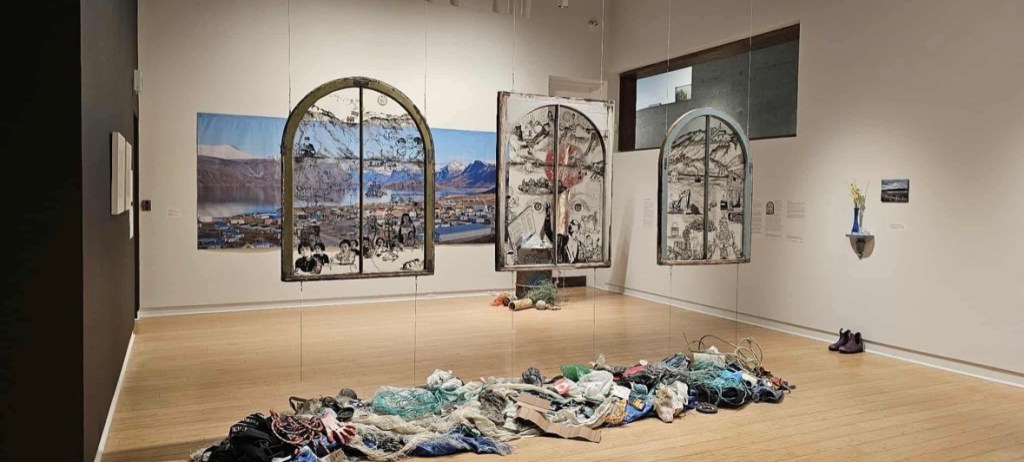
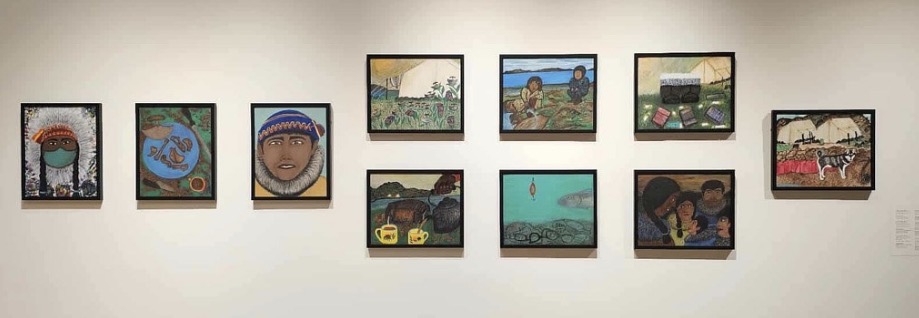
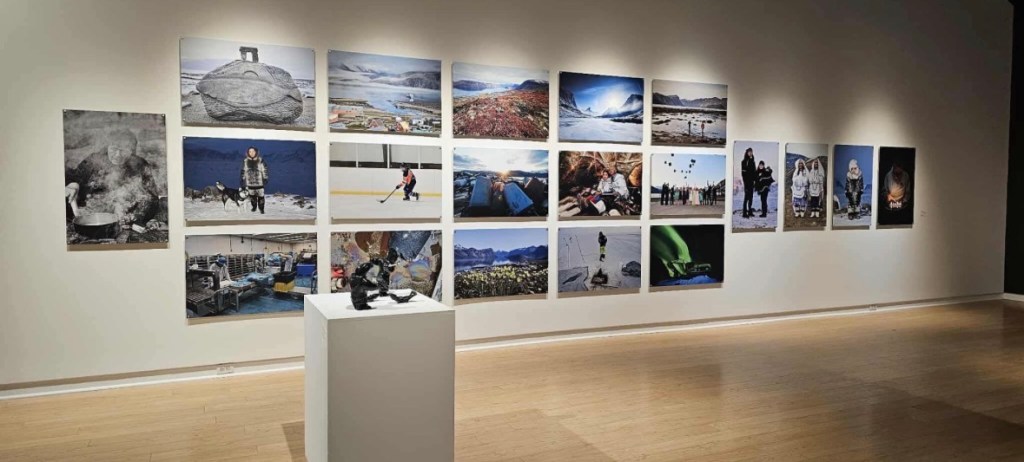
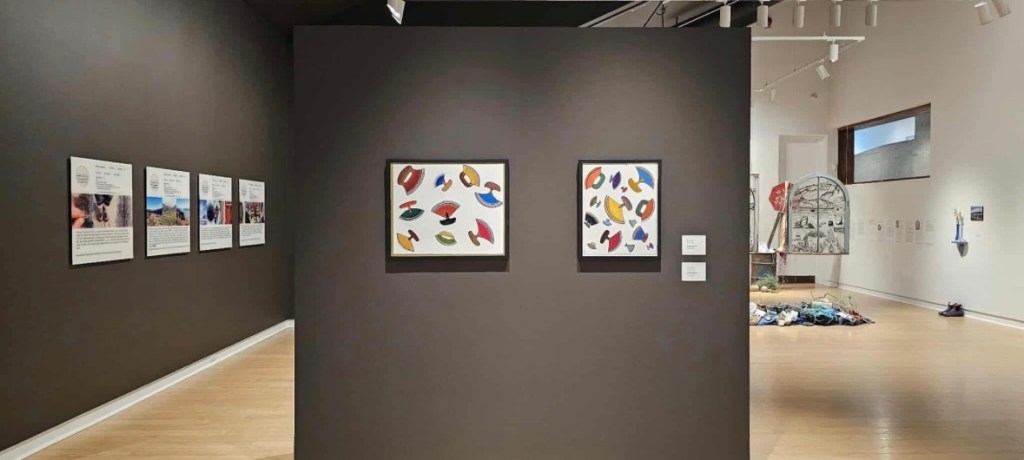
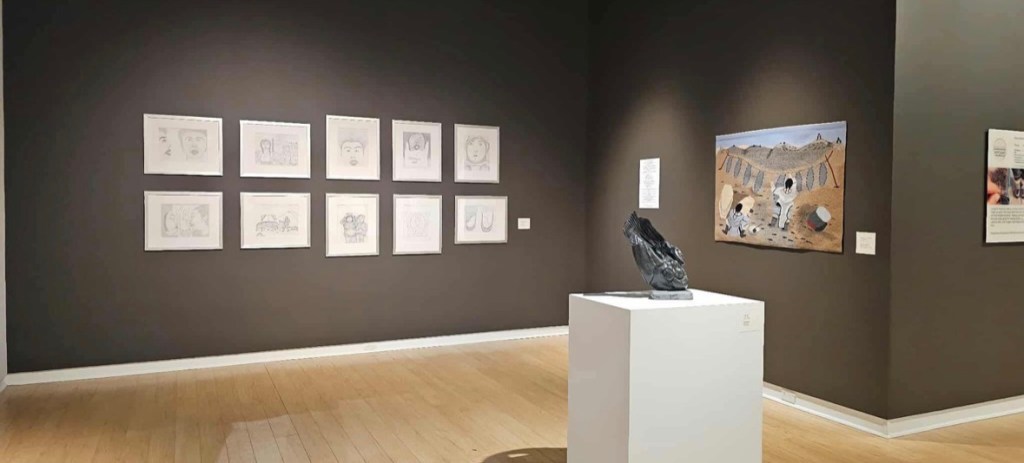
To ensure the integrity of Inuit voices be maintained, the exhibit included two areas: one with settler art by Renders, as shown in the photo above, and another with Inuit art by Madeleine Qumuatuq, Jupa Ishulutak, Kawtysie Kakee, Annie Kilabuk (1932-2005), David Kilabuk, Talia Metuq, Oleepika Nashalik, and Malaya Pitsiulak, as shown below.
To meet the artists and learn about Panniqtuuq, watch this video.
What I want, what I really, really want
When I left the gallery after viewing Art + Waste in Panniqtuuq on September 29, 2025, I imagined myself returning several times before its closing date. Sadly, that never happened, which is why I’ve published this opinion piece on the anniversary of its launch.
I’m hoping for another chance.
Here’s what that could look like:
- Renders receives maximum funding from the Canada Council for the Arts for a major showing in Ottawa at the National Gallery of Canada which includes the artist talks, demonstrations and workshops that took place here in Peterborough;
- The NGC publishes a book form of the exhibit which can be sold across the country when it goes on tour;
- And yes, the exhibit goes on tour;
- Once the exhibit ends its cross-country travels, it finds a permanent, and prominent home in Canada’s capital city;
- Finally, a virtual, interactive tour becomes available so folks can access it from anywhere in the world.
My hopes for Art + Waste in Panniqtuuq may seem lofty. However, given Canada’s current plans to increase military presence in the Arctic, as well as mine it for critical minerals, I believe it is crucial that the exhibit be seen by as many people as possible, as soon as possible.
During these volatile times, Inuit voices need to be heard and the truth about who is responsible for Arctic waste must be told.
Thank you for reading. ❤️
This post is the first of an ongoing series discussing the exhibit. Please check in periodically, to see what’s new.
Not able to comment? Send me a note Here.


Yes with more military presence and the sea ice gone much faster in the season will have more traffic thus garbage at all levels.
Thank you for your insights and making more awareness and your knowledge.
LikeLiked by 1 person